
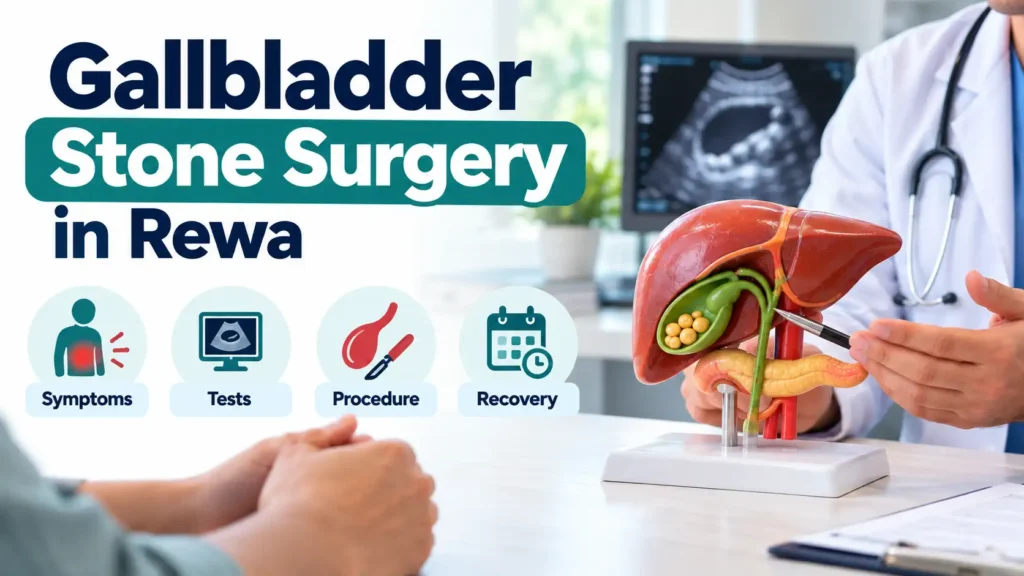
Gallstones can sit quietly for years without causing a single issue. But all it takes is one heavy, oily meal to trigger a sharp ache under your right ribs, suddenly demanding your full attention. When patients visit us to discuss gallbladder stone surgery in Rewa, our first goal is figuring out if the stones actually need to be removed. Surgery is usually considered when they cause painful attacks, but stones found entirely by chance might not need an operation at all.
Gallstone Symptoms: Pain After Eating and Other Warning Signs
Gallbladder stones are hardened deposits of bile that form inside the gallbladder, the small organ under the liver that stores bile. They may cause no symptoms, but when a stone blocks a duct they can cause upper abdominal pain, nausea and vomiting. Stones that cause symptoms are usually treated by removing the gallbladder.
- Pain after eating, especially after oily or heavy meals, felt in the upper right or middle of the abdomen.
- Pain that builds for a while, stays for minutes to hours and then fades.
- Pain that spreads to the right shoulder blade or the back.
- Nausea, vomiting, bloating or a heavy, uncomfortable fullness.
- Repeated attacks that follow a similar pattern each time.
These gallstone symptoms come from the same cause: a stone briefly blocks the outflow of bile, and the gallbladder squeezes against it.
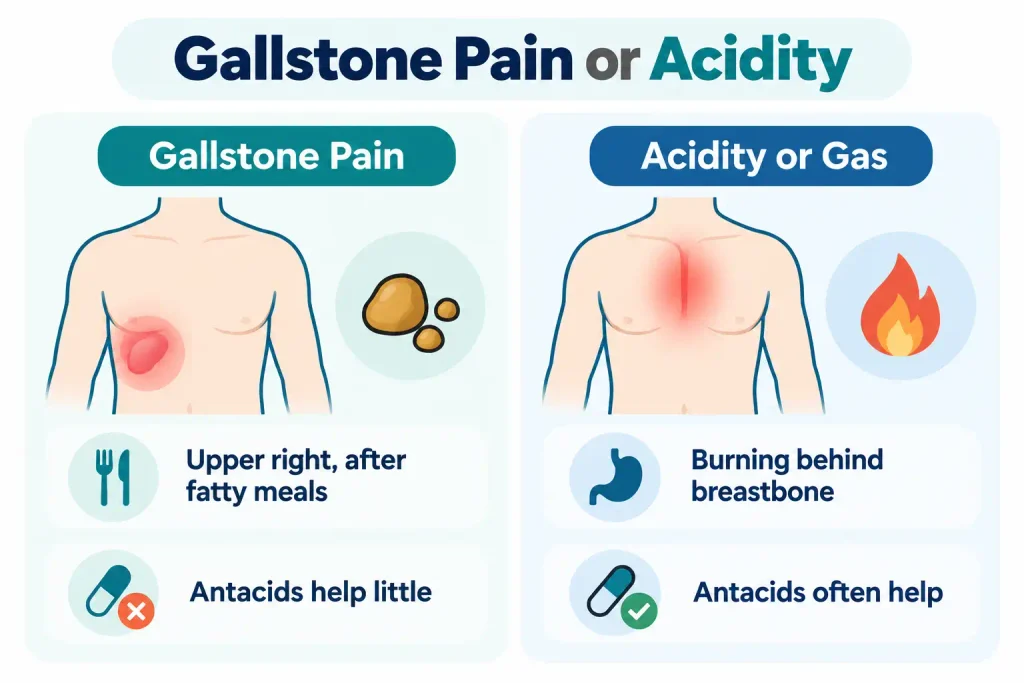
Gallstone Pain or Acidity? How the Two Usually Differ
| Feature | Gallstone pain | Acidity or gas |
|---|---|---|
| Usual place | Upper right or centre of the abdomen, sometimes spreading to the shoulder blade | Burning behind the breastbone or in the upper middle abdomen |
| Timing | Often after a fatty meal, building and then easing over minutes to hours | Often linked to spicy food, lying down or an empty stomach |
| Effect of antacids | Usually little relief | Often some relief |
| Other signs | Nausea or vomiting during an attack | Sour taste, belching, throat burning |
The table shows patterns, not a diagnosis. An abdominal pain assessment by a doctor matters because the appendix, intestine, pancreas and stomach can cause similar pain. When the cause lies outside the gallbladder, a surgeon may discuss abdominal surgery in Rewa or another route instead.
Warning Signs That Need Urgent Care
Fever with chills, yellow skin or eyes, or severe pain lasting several hours needs same day medical attention. These signs can mean a blocked duct, infection or pancreatitis.
- Pain that does not ease and keeps getting worse.
- Yellowing of the skin or whites of the eyes, dark urine or pale stools.
- Fever, shivering or repeated vomiting.
- Intense, constant pain in the upper abdomen that may reach the back.
Why Gallstones Form and Who Is More Likely to Get Them
The Mayo Clinic gallstones guide says doctors do not fully know why stones form. Cholesterol stones and pigment stones are the two main types. Some factors raise the chance.
- A family history of gallstones.
- Being overweight or obese.
- Rapid weight loss, such as crash diets.
- Skipping meals or fasting for long periods.
Having a risk factor does not mean you will get symptoms, and stones can form without any of them.
Gallstone Diagnosis in Rewa: Ultrasound for Gallstones and Other Tests
A gallbladder stone consultation begins with questions about your pain, meals and past attacks, followed by an examination of the abdomen. The next steps depend on what the doctor suspects.
- History and examination: the pattern of pain, nausea, fever, jaundice and previous episodes.
- Ultrasound for gallstones: usually the first scan. It can show stones, thickening of the gallbladder wall and the width of the bile duct. You may be asked to fast for several hours beforehand.
- Blood tests: liver function, pancreas enzymes and markers of infection.
- Further imaging when needed: an MRI of the bile ducts (MRCP) or a CT scan if a duct stone or a complication is suspected.
- Fitness check: blood tests, an ECG and review of your medicines before anaesthesia.
This careful gallstone diagnosis keeps the plan matched to the problem, because a scan showing stones does not by itself prove that the stones are causing your pain.
Bile Duct Stones: When the Problem Moves Beyond the Gallbladder
Stones can slip out of the gallbladder and lodge in the common bile duct, the channel that carries bile to the intestine. Bile duct stones can cause jaundice, infection of the duct and pancreatitis. They are often dealt with using an endoscopic procedure called ERCP, which may be planned before or around the gallbladder operation.
When Gallstones Need Surgery: Signs That Watching Is No Longer Enough
The NHS gallstones treatment page explains that stones without symptoms may need no immediate treatment, while treatment for painful attacks depends on how much they affect daily life. Surgeons usually recommend an operation in these situations.
- Repeated attacks of biliary colic, the severe pain caused by a stone blocking a duct.
- Inflammation of the gallbladder, called cholecystitis.
- A stone in the bile duct, or jaundice caused by a stone.
- Pancreatitis caused by gallstones.
- A condition that raises the risk of complications, which your doctor will explain.
Stones found by chance on a scan, with no symptoms, usually need no operation. Your doctor will say whether you fall in that group.
Gallstones Treatment in Rewa: Options Compared
| Option | What it involves | Usually considered when | Points to discuss |
|---|---|---|---|
| Watchful waiting | Regular review and advice on warning signs | Stones cause no symptoms or only rare mild ones | Attacks can start later, so you need to know when to return |
| Medicines to dissolve stones | Tablets taken for a long period | Small cholesterol stones in patients unfit for surgery | The NHS notes stones can form again after treatment stops |
| ERCP | An endoscope clears stones from the bile duct | Bile duct stones | The gallbladder stays in place unless removed separately |
| Laparoscopic cholecystectomy | Keyhole removal of the gallbladder | Stones with symptoms or complications | General anaesthesia and the risks listed below |
| Open cholecystectomy | Removal through a larger cut | Severe inflammation or scarring that makes keyhole surgery unsafe | A longer recovery |
Gallbladder Stone Surgery in Rewa: How Keyhole Cholecystectomy Works
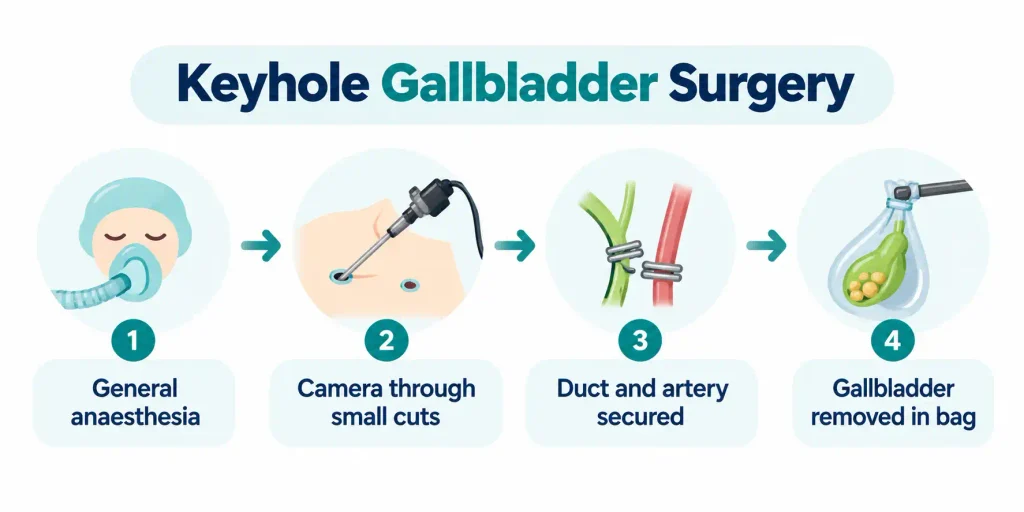
Laparoscopic gallbladder surgery in Rewa follows the same principles as laparoscopic surgery in Rewa for other abdominal organs: a camera and thin instruments pass through small cuts so that the surgeon works from a magnified screen view. A gallbladder surgeon usually follows these steps.
- Anaesthesia: you are put to sleep under general anaesthesia.
- Access: the abdomen is gently filled with carbon dioxide gas, and three or four small cuts are made for the camera and instruments.
- Identifying the structures: the surgeon clearly identifies the cystic duct and the cystic artery, which supply the gallbladder, before cutting anything.
- Securing and dividing: the duct and artery are closed with small clips and divided.
- Removal: the gallbladder is separated from the liver and taken out through one of the cuts, usually inside a bag.
- Final check: the area is checked for bleeding or leakage, the gas is released, the cuts are closed and a drain is placed only if the surgeon thinks it is needed.
- Recovery room: you are monitored until the anaesthesia wears off.
Whether you hear it called a gallbladder stone operation, gallbladder removal, or a cholecystectomy, these terms all describe the same surgical procedure offered at our Rewa hospital and the details can differ with the size of the stones, the amount of inflammation and your previous surgery.
Keyhole or Open: When the Surgeon May Change the Plan
- Dense scarring from earlier inflammation or surgery.
- Severe infection or swelling that hides the normal anatomy.
- Bleeding that cannot be controlled through the small cuts.
- Doubt about the bile duct anatomy.
Switching to an open operation in these cases is a safety decision made for your protection, and your surgeon will discuss this possibility with you before you consent.
Living Without a Gallbladder
Patients often ask us how they will digest food after surgery. The truth is, the gallbladder is not an essential organ, and you can lead a completely normal, healthy life without it. After removal, bile flows directly from the liver into the intestine. Some patients notice looser stools for a while, and your surgeon can advise on food if that happens.
Risks to Discuss Before Gallbladder Surgery
The operation is widely performed and generally considered safe, yet all surgery carries risk. Before you make any decisions, we will sit down with you and openly discuss these risks:
- Bleeding or infection at the wounds or inside the abdomen.
- Leakage of bile, or, rarely, injury to the bile duct that needs further treatment.
- A stone left behind in the bile duct.
- Loose stools after surgery in a small number of patients.
- Reactions to the anaesthetic.
- Continuing abdominal symptoms in some patients, which is why a careful diagnosis before surgery matters.
Ask your surgeon how these risks apply to your health, what the alternatives are and what happens if you wait. You are free to take time or seek a second opinion.
Gallbladder Surgery Recovery: Wounds, Food and Returning to Routine
Gallbladder surgery recovery depends on whether the operation stayed keyhole, how inflamed the gallbladder was and your general health. Some patients go home the same day and others stay longer, and your surgeon will tell you what to expect.
- Take pain relief and any prescribed medicines as advised.
- Walk gently as soon as you are allowed, because movement helps recovery.
- Keep the small wounds clean and dry and follow the dressing instructions.
- Start with light meals and return to your usual diet gradually.
- Avoid heavy lifting and strenuous activity until your surgeon says it is safe.
- Attend the follow up visit and ask about the pathology report if one was sent.
Pain in the tip of the shoulder is common for a short time after keyhole surgery, because the gas used during the operation can irritate the diaphragm.
Warning Signs After Gallbladder Surgery
- Fever or chills.
- Yellow skin or eyes, or dark urine.
- Severe or worsening abdominal pain.
- Repeated vomiting.
- Redness, swelling or discharge from a wound.
Call the hospital or go to the nearest emergency department if any of these appear.
Preparing for Your Operation: A Practical Checklist
- Bring your ultrasound and other reports.
- Tell the doctor about all medicines, especially blood thinners and diabetes tablets, and about any allergies.
- Follow the fasting instructions given for your anaesthesia.
- Arrange for a family member to stay with you and drive you home.
- Ask how long the hospital stay is likely to be and what the estimate covers.
Food and Gallstones: What Diet Can and Cannot Do
The NHS notes that a healthy diet will not cure gallstones, but it can improve your general health and help control pain. Regular, moderate meals suit most patients better than long gaps or crash diets.
- Eat at regular times and avoid skipping meals.
- Lose weight slowly if you need to, rather than quickly.
- Note which meals trigger pain and discuss them with your doctor.
- Do not rely on diet or home remedies for repeated attacks.
Booking a Gallbladder Stone Consultation at Adarsh Hospital
If pain after eating keeps returning, or a scan has shown stones, a consultation can sort out whether you need treatment now, later or not at all. The surgical team at Adarsh Hospital provides general and laparoscopic surgery in Rewa, so related abdominal conditions can be assessed together.
- Your ultrasound, blood test and scan reports.
- A list of your medicines and allergies.
- A short note of when the pain comes, how long it lasts and what triggers it.
This content gives general information and does not replace an examination by a qualified doctor.
Whether your plan turns out to be watchful waiting or gallbladder stone surgery in Rewa, a clear diagnosis comes first. Book a consultation, bring your questions, and decide with your surgeon at a pace that suits you.
Frequently Asked Questions
1. Do all gallstones need surgery?
No. The Mayo Clinic notes that gallstones that cause no symptoms typically need no treatment. Surgery is usually advised when stones cause repeated pain, inflammation of the gallbladder, a blocked bile duct or pancreatitis. If a scan shows stones by chance, your doctor will explain the warning signs to watch for and when to return. Do not remove or ignore stones based on a scan report alone, because the pattern of your symptoms matters most.
2. Can gallstones be treated without surgery?
Sometimes. Stones without symptoms can be watched. Tablets that dissolve small cholesterol stones exist, but they work slowly and the NHS notes that stones can form again after treatment stops. Stones in the bile duct may be removed with an endoscopic procedure called ERCP, which leaves the gallbladder in place. For repeated painful attacks, removing the gallbladder is the usual long term answer. Your surgeon will explain which route suits your stones.
3. Is gallbladder surgery painful?
You will be asleep during the operation, so you should not feel it. Afterwards, soreness around the small cuts and pain in the shoulder tip from the gas used during surgery can occur, and the level differs from person to person. Your team will prescribe pain relief and encourage gentle walking. Pain that keeps rising, or comes with fever or yellow skin, needs prompt review because it may signal a problem.
4. How long does it take to recover from gallbladder surgery?
Recovery depends on whether the operation stayed keyhole, how inflamed the gallbladder was and your health. Some patients go home the same day, while others stay longer. Light activity may restart sooner than heavy lifting or strenuous work. Your surgeon will give you a plan and a review date for your case, and you should follow that advice rather than compare yourself with another patient who had a different operation.
5. Can you live without a gallbladder, and what can you eat?
Yes. The NHS says the gallbladder is not essential, and bile flows from the liver straight into the intestine after removal. You usually start with light meals and return to your normal diet gradually. Some patients have looser stools for a while, particularly after very fatty meals. If that continues, tell your surgeon, because diet changes or medicines can help. Regular, moderate meals suit most patients well.
6. What happens if gallstones are left untreated?
Stones without symptoms may never cause trouble. Stones that cause symptoms can lead to repeated attacks and, in some patients, inflammation of the gallbladder, a blocked bile duct, infection or pancreatitis. The Mayo Clinic lists pancreatitis as intense, constant pain that usually needs hospital care. If you have had a painful attack, see a doctor instead of waiting, and seek urgent help for fever, jaundice or severe lasting pain.
7. How do I know if the pain is from gallstones or gas?
Gallstone pain is usually felt in the upper right or middle abdomen, often after a fatty meal, and it builds and fades over minutes to hours. It may spread to the right shoulder blade and come with nausea. Gas and acidity more often cause burning or bloating and respond to antacids. These are only patterns. An examination and an ultrasound can confirm the cause, so avoid guessing when attacks keep returning.
8. Can gallstones come back after gallbladder removal?
Stones cannot form in a gallbladder that has been removed, but stones can occasionally form in or pass into the bile ducts afterwards, and some patients continue to have abdominal symptoms for other reasons. A stone missed during surgery is another possibility. If pain, jaundice or fever returns after surgery, contact your surgeon, because tests such as ultrasound or MRCP can show the cause.
9. Which doctor should I see for gallbladder stones in Rewa?
A general surgeon is the usual specialist for gallstones, and a gastroenterologist helps when bile duct stones need ERCP. A gallbladder surgeon in Rewa will take your history, examine you, arrange an ultrasound and blood tests, and explain whether you need an operation. Bring your earlier reports and a list of medicines. A family physician can start the assessment and refer you if surgery looks likely.
10. How much does gallbladder surgery cost?
The cost of gallbladder stone surgery in Rewa depends on the type of operation, the anaesthesia, the room category, the tests, the length of stay and the medicines. A reliable figure cannot be given without an examination. After your consultation, ask the hospital billing desk for a written estimate that lists what is included, so you can plan ahead and ask questions before you decide.