
If toilet visits have started to hurt, you deserve a proper diagnosis rather than another week of guessing. Pain, burning and bleeding can come from more than one condition, and the treatment differs for each.
Treating Fissures in Rewa: Recognize These Symptoms
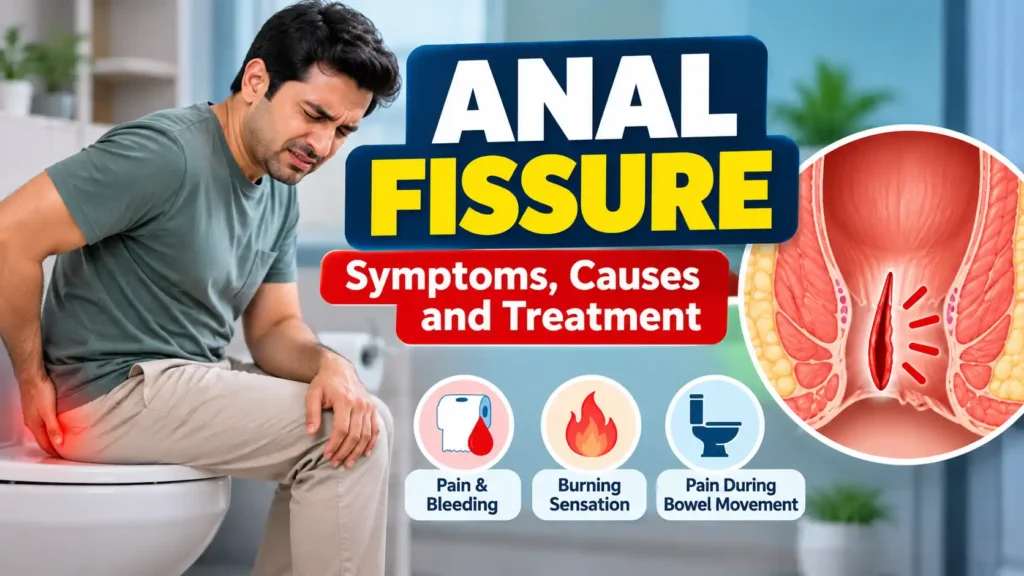
An anal fissure is a small tear in the lining of the anal canal. It causes sharp pain during a bowel movement, often followed by burning and a little bright red blood. Fissures often heal with simple care, while a tear lasting beyond six weeks is called chronic and may need further treatment.
- Pain during bowel movements is usually described as sharp or cutting, and it is the symptom that sends patients to a doctor.
- Burning after passing stool can last for several hours, long after the toilet visit is over.
- Bright red streaks of blood on the stool or toilet paper, usually in small amounts.
- Fear of going to the toilet, which leads to holding on and harder stool.
- A tight, spasming feeling in the anal muscle.
- A small skin tag at the edge of the anus in longer standing cases.
Why a Fissure Burns After You Pass Stool
The skin lining the anus is rich in nerve endings, so even a small tear can hurt sharply. After the stool passes, the ring of muscle around the anus (the sphincter) may tighten in spasm. Doctors think this tightness reduces blood flow to the tear and slows healing, which is why the burning can return with each bowel movement.
Acute and Chronic Fissures: What Patients in Rewa Need to Know
A fresh tear is called acute. A chronic fissure is one that has lasted beyond six weeks or keeps coming back. Chronic tears behave differently, and doctors often look for these signs.
- A deeper tear with a rounded, thickened edge.
- Fibres of the sphincter muscle visible at the base.
- A skin tag at the outer end and a small swelling at the inner end.
- Pain that returns after short periods of relief.
Fissure or Piles? How to Tell the Difference Before You Start Treatment
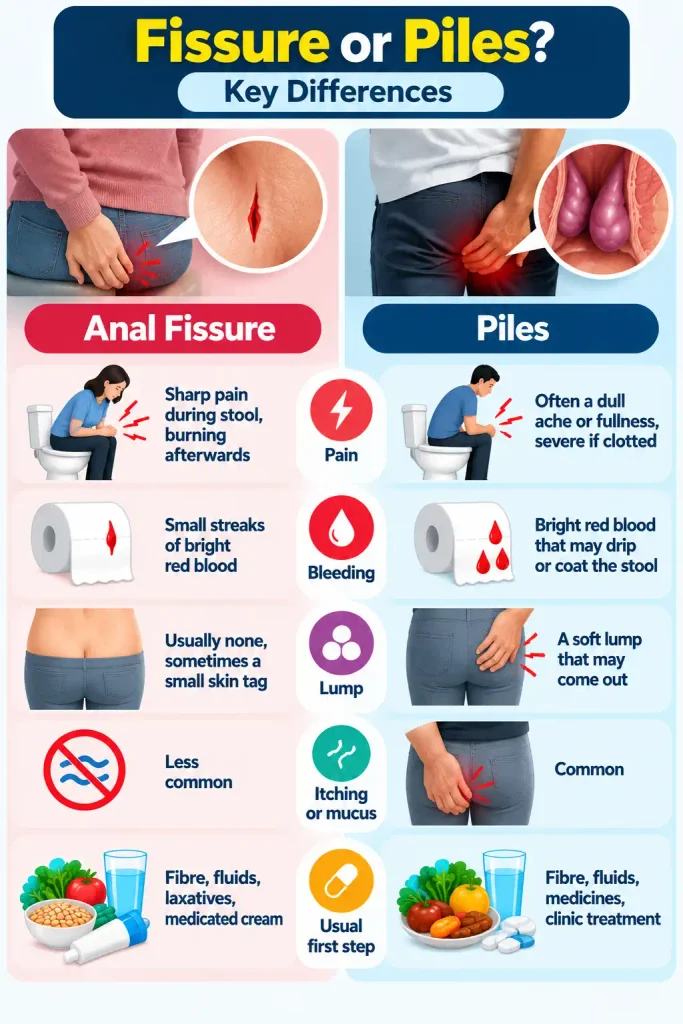
Both conditions cause bleeding, and both can occur together. The pattern of pain is usually the clue, but only an examination can confirm the cause.
| Feature | Anal fissure | Piles |
|---|---|---|
| Pain | Sharp during stool, burning afterwards | Often a dull ache or fullness, severe if clotted |
| Bleeding | Small streaks of bright red blood | Bright red blood that may drip or coat the stool |
| Lump | Usually none, sometimes a small skin tag | A soft lump that may come out |
| Itching or mucus | Less common | Common |
| Usual first step | Fibre, fluids, laxatives, medicated cream | Fibre, fluids, medicines, clinic treatment |
If a bleeding lump is the main problem rather than a tear, a surgeon may discuss laser piles surgery in Rewa as one option for suitable cases. Pus, discharge or a recurring boil beside the anus points elsewhere, often to an anal fistula, which needs fistula treatment in Rewa and not fissure care. The NHS rectal bleeding guidance lists other causes of bleeding, which is one more reason to be examined.
Anal Tear Cases in Rewa: What Causes It and Who Gets One
The cause is not always clear. According to the NHS anal fissure page, fissures are more common in people aged 15 to 40 and in young children. Several situations raise the risk.
- Constipation and hard, dry stool.
- Frequent diarrhoea.
- Pregnancy and vaginal childbirth.
- Inflammatory bowel conditions such as Crohn’s disease or ulcerative colitis.
- Certain infections, including some sexually transmitted infections.
Constipation and Fissures: The Cycle That Keeps the Tear Open
- Hard stool stretches the anal canal and tears the lining.
- Pain makes you delay the next toilet visit.
- The stool becomes drier and harder while it waits.
- The next bowel movement reopens the tear, and the cycle repeats.
Breaking this cycle is the foundation of treatment. The NHS constipation advice covers fibre, fluids and laxatives in more detail.
Fissure Diagnosis and Your Colorectal Consultation: What Happens
A fissure doctor, usually a general surgeon or colorectal surgeon, can often diagnose a fissure from your history and a gentle look at the area. A colorectal consultation is private and unhurried, and you can ask for a pause at any point.
- History: when the pain began, how long it lasts, bleeding, bowel habits, diet and any creams already used.
- Gentle inspection: the doctor parts the buttocks and looks for the tear, a skin tag or other problems.
- Internal examination only if tolerable: a fissure can be too painful for a full examination, so it may be delayed or done under anaesthesia, as the NHS describes.
- Further tests when the picture is unusual: a tear away from the usual midline position, several tears, poor healing, weight loss or bowel disease may need more investigation, including a colonoscopy.
This careful fissure diagnosis matters because a tear that does not behave like a simple fissure sometimes has another cause.
How Fissure Treatment in Rewa Usually Progresses, Step by Step
Doctors usually move from the gentlest option to the more involved ones, and some patients never need to go beyond the first steps. Anal fissure treatment in Rewa follows the same order.
- Soften the stool: more fibre, plenty of fluids and a laxative if constipation is present.
- Ease the pain: a warm, shallow bath after passing stool and pain relief as advised by your doctor.
- Relax the muscle and help healing: a prescribed cream, which the NHS says may be needed for up to 8 weeks.
- Review: a follow up visit to check healing and adjust the plan.
- Consider a procedure: only if the tear persists or keeps returning.
| Fissure treatment options | What it does | Usually considered when |
|---|---|---|
| Fibre, fluids and laxatives | Softens stool so the tear is not stretched again | As the first step in the plan |
| Medicated creams | Relax the anal muscle and improve blood flow to the tear | The tear is not healing with stool care alone |
| Botulinum toxin injection | Temporarily relaxes the sphincter muscle | Creams have not worked or are not suitable |
| Lateral internal sphincterotomy | A small cut in the muscle to reduce tension | The fissure is chronic or keeps returning |
| Fissurectomy or laser assisted procedures | Removes or treats the damaged tissue | Selected cases, depending on the surgeon’s assessment |
Medical Treatment for Fissure: Why Patience and Consistency Matter
A cream only works if it is used as prescribed and the stool stays soft. Do not start a medicated cream without advice, because some can cause side effects such as headache. Tell your doctor about any pregnancy, other medicines you take and any earlier reaction to a cream.
Can an Anal Fissure Heal on Its Own?
Often, yes. The NHS says an anal fissure usually heals on its own, particularly when stool is kept soft. See a doctor if symptoms worsen or have not improved after 7 days of treating it yourself.
How Long Does an Anal Fissure Take to Heal?
Healing time differs from person to person. A tear that is still present after six weeks is labelled chronic, and a cream course may run for up to 8 weeks. Your doctor will set a review date based on your own symptoms.
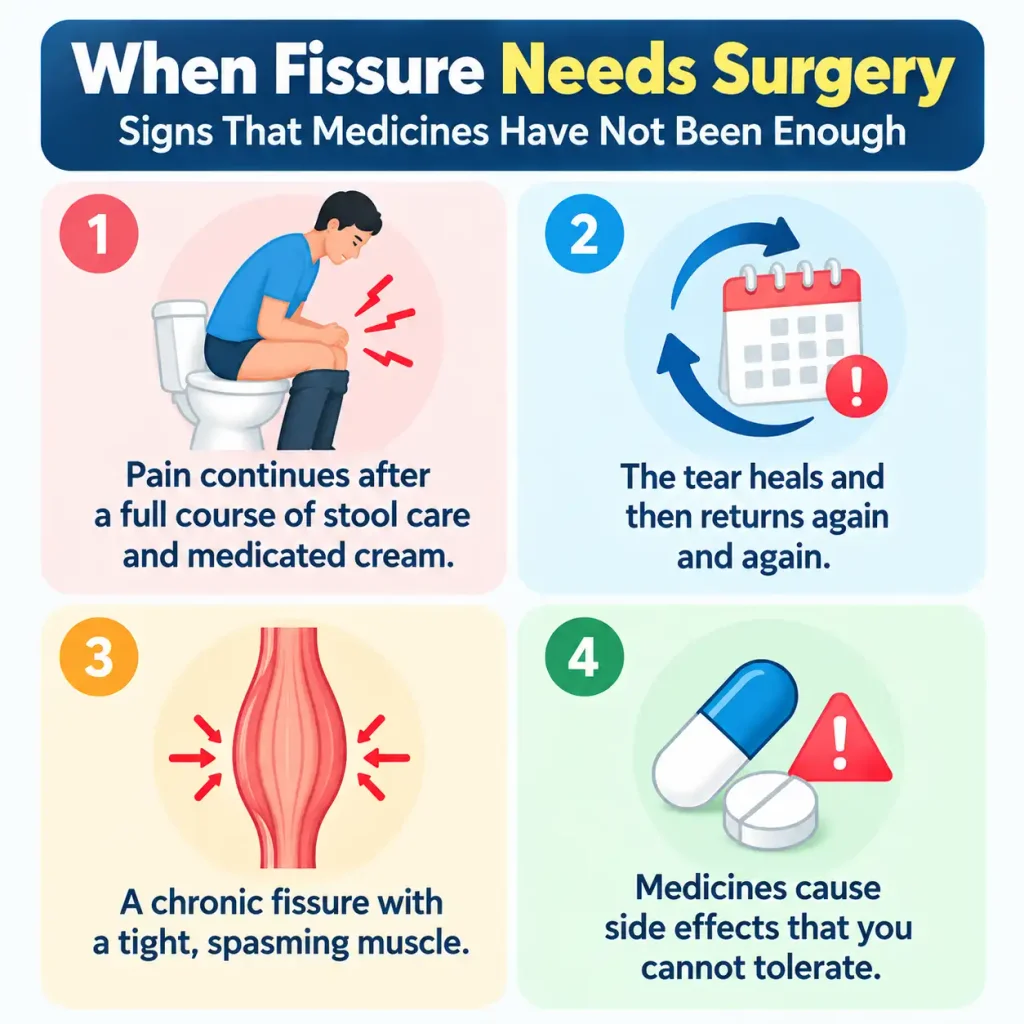
When Fissure Needs Surgery: Signs That Medicines Have Not Been Enough
The NHS notes that a procedure may be recommended if other treatments do not work or fissures keep returning. Doctors may raise surgery in these situations.
- Pain continues after a full course of stool care and medicated cream.
- The tear heals and then returns again and again.
- A chronic fissure with a tight, spasming muscle.
- Medicines cause side effects that you cannot tolerate.
Fissure surgery is a decision made after an examination, with a full discussion of the options and the alternatives.
Understanding Your Fissure Surgical Options
- Lateral internal sphincterotomy: the surgeon makes a small cut in the internal anal sphincter to reduce tension so the tear can heal.
- Botulinum toxin injection: an injection that relaxes the muscle for a limited time.
- Fissurectomy: the damaged edges of the fissure are removed.
- Advancement flap: healthy skin is moved over the tear in selected, difficult cases.
- Laser fissure treatment: some surgeons use laser energy to treat the tear or to relax the muscle. Availability, suitability and evidence vary, so ask why a method suits you.
Risks to Discuss Before Fissure Surgery
The NHS points out that the main risk is weakening part of the anal sphincter muscle. That can mean temporary or, rarely, lasting difficulty controlling gas or loose stool. Other possible problems include bleeding, infection, pain and recurrence of the tear.
Ask your surgeon how each option may affect bowel control and what happens if you choose to wait. A fair consultation covers the benefits, the risks and the alternatives.
Preparing for a Procedure and Caring for Yourself Afterwards
- Tell the doctor about all medicines you take, especially blood thinners, and about any allergies.
- Follow the fasting instructions given for your type of anaesthesia.
- Arrange for someone to accompany you home.
- Stock a stool softener and fibre supplement before the day.
Recovery differs with the procedure and the person, so your surgeon will give you a plan that fits your case.
- Take the prescribed medicines on time.
- Soak in warm water after each bowel movement, as advised.
- Drink plenty of fluids and eat fibre rich food.
- Keep the area clean and dry.
- Avoid straining and attend the follow up visit.
Warning Signs After a Fissure Procedure
- Heavy bleeding or large clots.
- Fever or chills.
- Severe pain that keeps increasing.
- Difficulty passing urine.
- Foul smelling discharge or spreading swelling.
Call the hospital or visit the nearest emergency department if any of these appear.
Habits That Help Prevent the Next Fissure
- Eat fibre daily and drink enough water.
- Do not ignore the urge to pass stool, as the NHS advises.
- Treat constipation and loose stool early.
- Avoid sitting for long periods on the toilet.
- Keep the area clean and dry after each bowel movement.
Booking a Colorectal Consultation at Adarsh Hospital
If the pain keeps returning or you are unsure whether it is a fissure, piles or something else, book an examination. The surgical team at Adarsh Hospital provides general and laparoscopic surgery in Rewa, so related anal and abdominal conditions can be assessed together.
- A list of your medicines and allergies.
- Any earlier reports or colonoscopy results.
- A short note on when the pain began and what has helped.
This content gives general information and does not replace an examination by a qualified doctor.
Whether your answer turns out to be a fibre rich diet, a short course of cream or a procedure, an examination is the step that settles it. Book a colorectal consultation, bring your questions, and plan fissure treatment in Rewa at a pace that suits you.
Frequently Asked Questions
1. Can an anal fissure heal on its own?
Yes, it often can. The NHS says an anal fissure usually heals on its own, especially when you keep the stool soft with fibre, fluids and a laxative if needed. A warm, shallow bath after passing stool can ease the pain. If symptoms get worse or have not improved after about 7 days of home care, see a doctor, because a stubborn tear may need a medicated cream or another treatment.
2. How long does an anal fissure take to heal?
Healing time varies. A fresh tear may settle within weeks when constipation is controlled, but a tear that lasts beyond six weeks is called chronic and often needs medical treatment. Cream courses may run for up to 8 weeks, as the NHS notes. Healing is slower if constipation continues or if you strain. Your doctor will review the tear and tell you whether to continue, change or add treatment.
3. Is it a fissure or piles?
Pain is the best clue. A fissure usually causes sharp pain during a bowel movement and burning afterwards, with small streaks of bright red blood. Piles more often cause a soft lump, itching or a dull ache, and may bleed without much pain. You can have both at the same time, so a doctor should examine you before you start any cream or home treatment.
4. Why does it burn after passing stool?
The skin inside the anus is rich in nerve endings, so a tear stays sensitive after the stool has passed. The anal muscle may also tighten in spasm, which can keep the pain going for hours. Soft stool, a warm shallow bath and any pain relief your doctor recommends can help. Burning that lasts for weeks needs an examination to check for a chronic fissure.
5. Which cream is used for a fissure?
Doctors commonly prescribe creams that relax the anal muscle, such as those containing glyceryl trinitrate or diltiazem, and the NHS says a cream may be used for up to 8 weeks. Some creams cause side effects such as headache. Do not buy or share a cream without advice. Your doctor will choose one that suits your health, explain how to apply it and tell you when to return for review.
6. Does a fissure need surgery?
Not always. Some fissures settle with soft stool, simple home care and medicines. The NHS says a procedure may be recommended if other treatments do not work or the tear keeps coming back. Surgery is a shared decision after an examination. Your surgeon should explain the options, the risks, including possible effects on bowel control, and what happens if you choose to wait.
7. Is fissure surgery safe, and will it affect bowel control?
Procedures for fissure are performed by trained surgeons after careful assessment, but no operation is free of risk. The NHS notes the main risk is weakening part of the anal sphincter muscle, which can cause temporary or, rarely, lasting problems controlling gas or loose stool. Bleeding, infection and recurrence are also possible. Ask your surgeon how the risks apply to you before you consent.
8. Can constipation cause a fissure, and how do I prevent another?
Yes. Hard, dry stool can stretch and tear the anal lining, and constipation is a common cause. To lower the chance of another tear, eat fibre daily, drink enough water, treat constipation early and do not ignore the urge to pass stool. Avoid long periods on the toilet. If constipation keeps returning, ask your doctor to look for the cause.
9. Can a fissure turn into cancer?
A simple fissure is a tear, not a cancer. However, a tear that does not heal, sits away from the usual midline position, or comes with weight loss or ongoing bleeding should be checked, because other conditions can look similar. Do not diagnose yourself from the internet. A doctor can examine you, decide whether tests such as a colonoscopy are needed and explain what they find.
10. Which doctor should I see for a fissure in Rewa?
Start with a general surgeon or a colorectal surgeon, who can examine you, explain your diagnosis and discuss treatment. A family physician can also make the first assessment and refer you. For a colorectal consultation, bring a list of your medicines, any earlier reports and a short note on your symptoms, so the visit is as useful and focused as possible.