
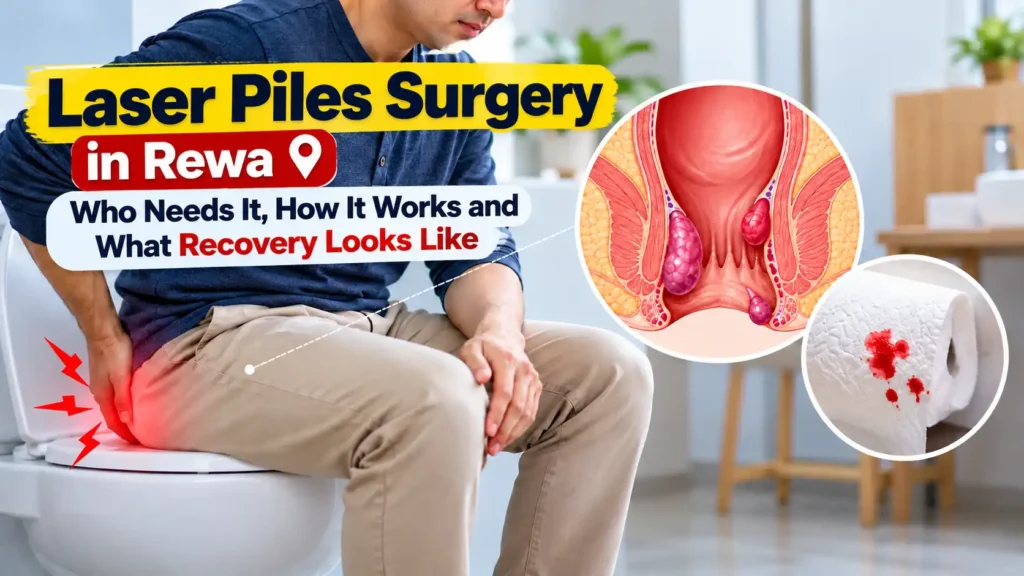
A few drops of blood on the toilet paper are easy to ignore for a week. Then a week becomes a month, and embarrassment keeps a treatable problem growing. Piles are swollen blood vessels in and around the anus, and they respond better when a doctor sees them early. If diet changes and medicines have stopped helping, laser piles surgery in Rewa is one of the options a surgeon may discuss with you.
You do not have to put up with piles in silence. A clear diagnosis comes first, and a procedure comes only if you actually need one.
Piles Consultations in Rewa: Symptoms You May Notice
Piles, also called haemorrhoids, are swollen veins in the anus and lower rectum. The symptoms depend on whether the swelling sits inside the anal canal or under the skin around it.
- Bright red blood on the stool, on the toilet paper or in the pan, often without pain when the piles are internal.
- A soft lump that comes out during a bowel movement and may slip back by itself or need a gentle push.
- Itching, mucus leakage or a feeling that the bowel has not emptied fully.
- A hard, tender lump at the anal edge, a sign of painful piles that may be clotted (thrombosed) external piles.
- Dull aching or soreness, especially after long hours of sitting.
Bleeding during bowel movements is not always piles. Fissures, polyps and growths in the bowel can cause the same sign, so a doctor should examine you before any treatment is planned.
The Four Grades of Piles
Surgeons grade internal piles by how far they come down. The grade helps shape the treatment plan.
- Grade 1: the piles stay inside the anal canal and may bleed.
- Grade 2: the piles come out during straining and return on their own.
- Grade 3: the piles come out and must be pushed back by hand.
- Grade 4: the piles stay outside and cannot be pushed back.
Your symptoms and examination matter as much as the grade, so two people with the same grade may be advised different treatment.
Pain, Discharge or a Boil Near the Anus Points to Other Problems
Sharp pain during stool and burning afterwards often come from a small tear in the anal lining rather than from piles. A doctor can easily check for this and recommend the most effective fissure treatment in Rewa if a tear is the cause. Likewise, repeated discharge or a recurring boil beside the anus may signal an anal fistula, which requires targeted fistula treatment in Rewa instead of standard piles care.
Piles Diagnosis and Your First Consultation: What the Doctor Checks
A piles consultation is short, private and usually simpler than patients expect. The doctor begins by asking about your bowel habits, bleeding, pain, diet and any treatment you have already tried. The Mayo Clinic haemorrhoid guide explains that diagnosis starts with a detailed consultation and clinical assessment, and that an examination alone is sometimes enough.
- History: how long the bleeding has lasted, its colour, and whether you have weight loss, tiredness or a family history of bowel disease.
- External check: the skin around the anus is inspected for lumps, skin tags and clots.
- Digital rectal examination: a gloved, lubricated finger checks the canal for tenderness, tightness or growths.
- Anoscopy or proctoscopy: a short, lit tube lets the doctor see internal piles directly.
- Further tests when needed: a blood count or a colonoscopy may be advised, especially if you are above 40 or the bleeding has no clear cause.
Honest piles diagnosis matters because treating a bowel growth as piles delays the right care.
Nonsurgical Piles Treatment: What Usually Comes First
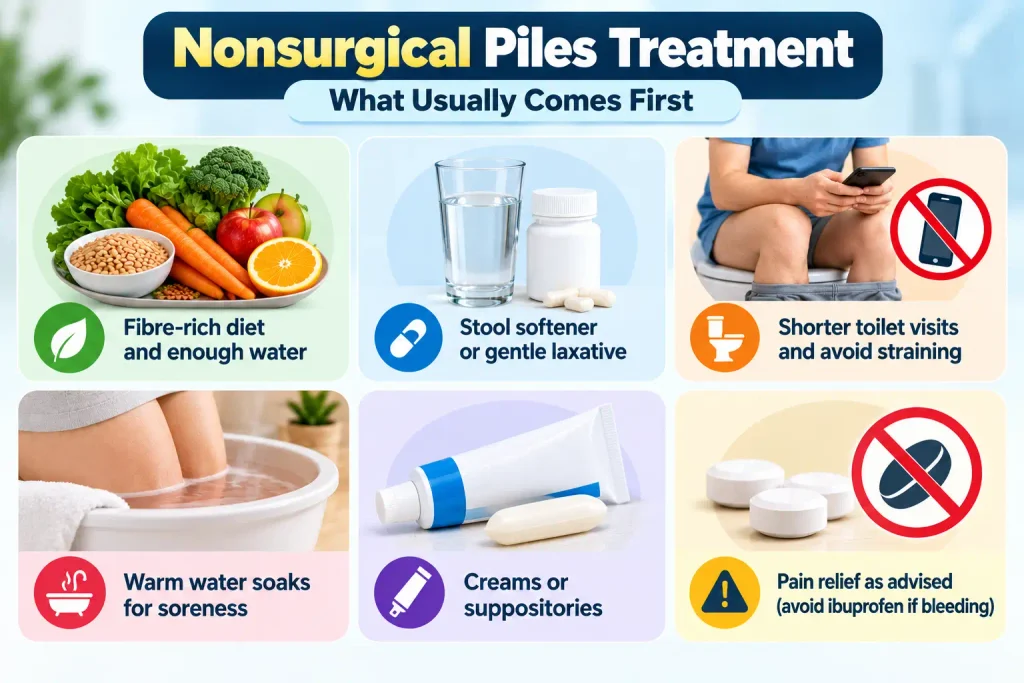
When you seek piles treatment in Rewa, your doctor will usually start with simple dietary changes, as the condition frequently settles and becomes manageable without surgery. The NHS piles treatment guidance lists medicines for constipation, pain relief and hospital treatments such as rubber band ligation and sclerotherapy before any operation is considered. It also cautions that even hospital treatment may not stop piles from returning.
- Fibre from vegetables, fruit, pulses and whole grains, with enough water through the day.
- A stool softener or gentle laxative if you are constipated.
- Shorter visits to the toilet, without straining or scrolling on the phone.
- Warm water soaks for soreness and itching.
- Creams or suppositories advised by a doctor or pharmacist.
- Pain relief as advised. The NHS says to avoid ibuprofen while piles are bleeding, so ask before taking any painkiller.
Can Piles Be Treated Without Cutting?
Yes, in several situations. Rubber band ligation places a small band around an internal pile so that it shrinks and drops off. Sclerotherapy injects a solution that shrinks the pile. Electrotherapy uses a gentle current for the same purpose. These nonsurgical piles treatment options usually suit smaller internal piles, and the doctor decides whether they fit your case. They are often the first line of treatment for haemorrhoids.
When Piles Need Surgery: Signs That Call for a Procedure Discussion
Haemorrhoid treatment in Rewa moves to a procedure discussion when home care and clinic treatments have not controlled the problem. The NHS piles surgery page says surgery to remove piles may be needed when other treatments do not work.
- Bleeding continues despite weeks of proper diet and medical treatment.
- Piles come out each time you pass stool and cause soreness or hygiene trouble.
- Clotted external piles keep returning and cause severe pain.
- Long standing blood loss has caused low haemoglobin or tiredness.
- Clinic treatments such as banding have not worked or are not suitable.
Only an examination can show whether you belong in this group.
How Laser Piles Surgery in Rewa Works, Step by Step
Laser piles surgery is a procedure in which a surgeon passes a thin laser fibre into or beside the pile tissue and delivers controlled heat. The heat shrinks the swollen tissue and reduces its blood supply, so bleeding and prolapse may settle. It generally avoids cutting the piles out, although suitability varies.
- Planning: the surgeon and anaesthetist decide the type of anaesthesia that suits you, such as spinal, regional or general.
- Preparation: you are positioned comfortably and the area is cleaned.
- Locating the piles: the surgeon identifies the swollen cushions with an anoscope.
- Laser delivery: the fibre releases energy in measured bursts to shrink the tissue and close its feeding vessels.
- Checking: the area is checked for bleeding and a light dressing is placed.
- Observation: you are monitored until the anaesthesia wears off, and the surgeon decides when you can go home.
Laser treatment for piles in Rewa follows these steps in broad terms. The exact method changes with the size and position of the piles, the anaesthesia plan and the surgeon’s training.
Laser Compared with Other Piles Operations
The right method depends on the grade, the size of the piles and your general health.
- Rubber band ligation: a clinic procedure for smaller internal piles, usually done awake with the area numbed.
- Sclerotherapy: an injection that shrinks the pile, used for selected internal piles.
- Laser procedure: heat shrinks the tissue without cutting it out, and it may suit some grade 2 and grade 3 piles.
- Conventional haemorrhoidectomy: the piles are cut out, and surgeons often consider it for large or grade 4 piles.
- Stapled haemorrhoidopexy: the piles are stapled back inside the anal canal.
Who May Not Be Suitable for the Laser Procedure
- Very large piles with a big external component.
- An abscess, infection or fistula that needs separate treatment.
- Bleeding with no confirmed cause, until the bowel has been checked.
- Health conditions or blood thinning medicines that need careful planning.
Your surgeon decides after examining you, and a different procedure may serve you better.
Is Laser Treatment for Piles Painful? What Patients Can Expect
You will receive anaesthesia, so you should not feel the procedure itself. Afterwards, soreness, swelling or a feeling of pressure can appear, and the level differs from person to person. No piles operation is free of discomfort, and your surgeon will prescribe medicines to keep you comfortable.
Ask your surgeon to describe your own likely discomfort and how it will be managed. A fair answer covers the first few days, bowel movements and sitting.
Preparing for a Piles Operation: A Practical Checklist
- Tell the doctor about all the medicines you take, especially blood thinners, diabetes medicines and any allergies.
- Follow the fasting and bowel preparation instructions exactly as given.
- Bring previous reports, blood tests and prescriptions.
- Arrange for a family member to accompany you home.
- Stock a stool softener, fibre supplement and loose, comfortable clothing.
Recovery After Piles Surgery: What Daily Care Looks Like
Recovery after piles surgery depends on the procedure, the size of the piles, your health and your work. Your surgeon will give you a timeline that fits your case, and that advice should replace any general figure you read online.
- Take the prescribed medicines on time.
- Soak in warm water as advised, especially after a bowel movement.
- Drink plenty of water and eat fibre rich food to keep stool soft.
- Walk gently around the house and avoid long periods on a hard seat.
- Avoid straining and heavy lifting until your surgeon allows it.
- Attend the follow up visit even if you feel well.
Warning Signs That Need Prompt Medical Attention
- Heavy bleeding or large clots.
- Fever or chills.
- Inability to pass urine.
- Severe pain that keeps increasing.
- Foul smelling discharge or spreading swelling.
Call the hospital or go to the nearest emergency department if any of these appear.
Risks and Limits to Discuss Before You Consent
All surgery carries risk, and a fair consultation covers it. Possible problems include bleeding, swelling, infection, difficulty passing urine, temporary discomfort and reactions to anaesthesia. Piles can also return, particularly when constipation continues, and a second treatment is sometimes needed.
A good consultation covers the risks, the alternatives and what happens if you wait. You are free to ask for time, questions or a second opinion.
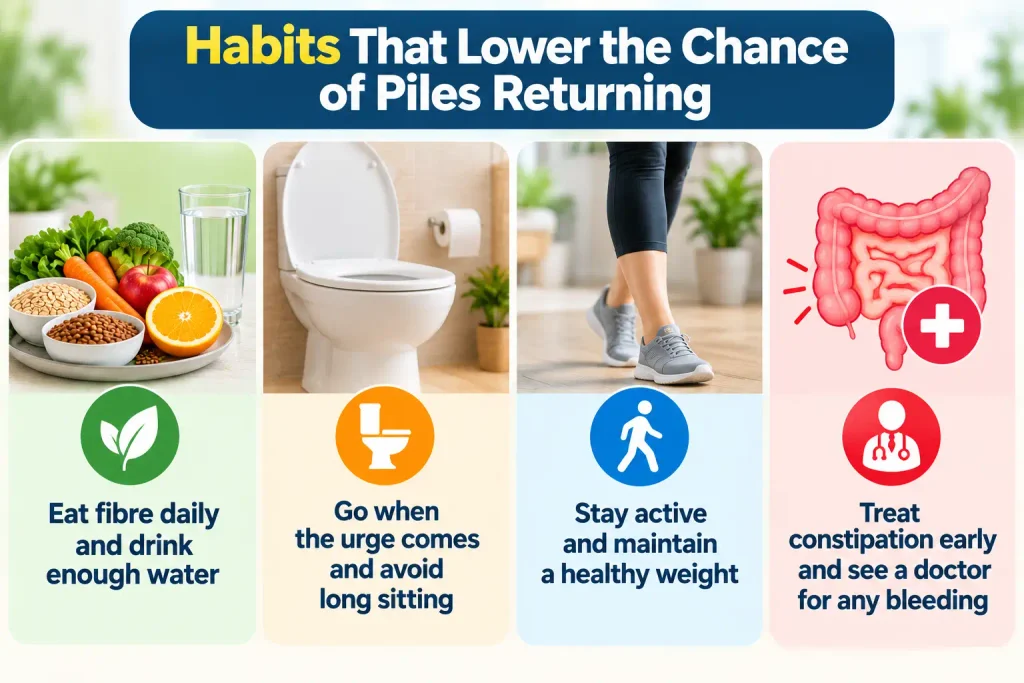
Habits That Lower the Chance of Piles Returning
- Eat fibre daily and drink enough water.
- Go when the urge comes and avoid sitting on the toilet for long.
- Treat constipation early instead of pushing harder.
- Stay active, and keep your weight in a healthy range.
- See a doctor for any bleeding rather than guessing the cause.
Booking a Piles Consultation at Adarsh Hospital
If bleeding, a lump or pain keeps coming back, a piles surgeon in Rewa can examine you and explain exactly what your treatment options are. The surgical team at Adarsh Hospital provides general and laparoscopic surgery in Rewa, so related anal and abdominal conditions can be assessed in the same visit.
- A list of your medicines and allergies.
- Any earlier reports, scans or colonoscopy results.
- A short note on when the symptoms began and what has helped.
This content gives general information and does not replace an examination by a qualified doctor.
Whether the answer turns out to be fibre and habit changes or laser piles surgery in Rewa, a proper examination is the step that settles the question. Book a consultation, bring your questions, and decide with your surgeon at your own pace.
Frequently Asked Questions
1. Is laser surgery for piles painful?
You will receive anaesthesia, so you should not feel the procedure itself. Afterwards, soreness, swelling or a feeling of pressure can appear, and the level differs from person to person. Your surgeon will prescribe medicines to ease discomfort and will advise warm water soaks, fibre and fluids to keep stool soft. A stool softener is often advised for the first few days. If pain becomes severe or keeps rising instead of settling, contact the hospital without waiting for your next visit.
2. Can piles go away without surgery?
Mild piles often settle with fibre, enough water, less straining and shorter toilet time. Creams and stool softeners can ease symptoms while the swelling reduces. The NHS also lists rubber band ligation, sclerotherapy and electrotherapy as treatments that do not need an operation. Piles that keep bleeding, keep coming out or cause pain despite proper care need a doctor’s review, because the plan may need to change.
3. How long is recovery after piles surgery?
Recovery depends on the procedure, the size of the piles, your general health and the kind of work you do. Some patients go home the same day, while others need a longer stay. Light desk activity may restart sooner than heavy physical work. Your surgeon will give a timeline for your case and will tell you when to return for review. Follow that advice instead of comparing yourself with another patient.
4. Can piles come back after laser treatment?
They can. The NHS notes that treatment does not always prevent piles from returning. Treated tissue shrinks, but ongoing constipation, straining and low fibre intake can lead to new swelling later. Daily fibre, enough water, short toilet visits and early treatment of constipation lower the chance. If symptoms return, see your surgeon early, because a smaller problem is usually easier to manage than a larger one.
5. How do I know if the bleeding is piles or something serious?
You cannot tell by looking. Bright red blood is common with piles, but fissures, polyps and bowel growths can also cause bleeding. See a doctor if bleeding lasts more than a few days, if the stool is dark or mixed with blood, or if you have weight loss, tiredness, a change in bowel habit or a family history of bowel disease. A colonoscopy may be advised, especially above the age of 40.
6. Is laser treatment for piles safe?
Laser piles surgery in Rewa is a recognised option when it is offered to suitable patients by a trained surgeon after a proper examination. No surgery is free of risk. Possible problems include bleeding, swelling, infection, difficulty passing urine, recurrence and reactions to anaesthesia. Safety depends on careful selection, preparation and aftercare. Ask your surgeon to explain the risks for your health and to describe the alternatives before you agree to any procedure.
7. What does piles surgery cost in Rewa?
The cost depends on the type of procedure, the anaesthesia, the room category, the tests needed, the length of stay and medicines. A fair figure cannot be given without an examination. After your consultation, ask the hospital billing desk for a written estimate that lists what is included, so you can plan ahead and ask questions before you decide on treatment.
8. Do I need to stay in the hospital overnight?
It depends. Some patients go home the same day after observation, while others stay longer because of the anaesthesia, the size of the piles, pain control or other health conditions. The NHS notes that conventional operations may need a stay of more than one day. Your surgeon will tell you in advance what to expect and what to arrange at home.
9. Which doctor should I see for piles in Rewa?
A general surgeon is the usual specialist for piles, and a colorectal surgeon can help with complex cases. A piles surgeon in Rewa will take your history, examine you, suggest tests if needed and explain both nonsurgical and surgical options. Bring a list of your medicines and any earlier reports. A family physician can also start the assessment and refer you if a procedure looks likely.
10. When can I eat normally and return to work after piles surgery?
Your surgeon will tell you when to restart your usual diet. Fibre rich meals and plenty of fluids help keep stool soft while you heal. Desk work may restart earlier than heavy lifting or long travel, and long sitting on hard seats can be uncomfortable at first. Avoid straining and follow the activity advice you receive, because the right timing depends on your procedure and how you feel.